
Evidence
Proving Damp, Mould and Disrepair: The Evidence That Actually Wins Cases
Your intake team collects photos of black mould, but without proper documentation of notice and causation, those images are worthless when the landlord's solicitor challenges liability.
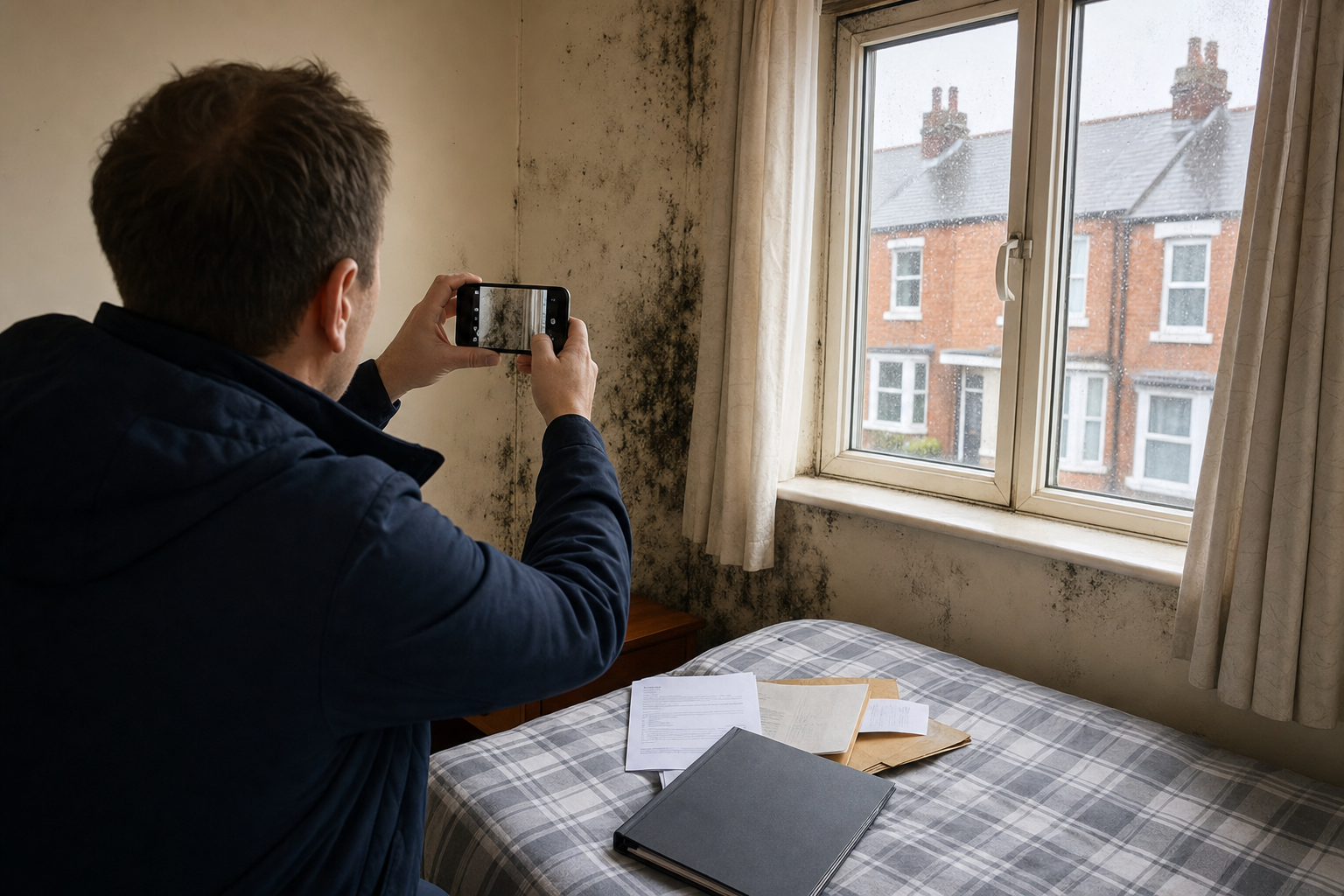
Illustration — intake context for the article
Damp and mould account for the majority of HDR claims I see come through CMC pipelines. The defect itself is rarely in dispute. What loses cases is the failure to prove the landlord knew about it and had reasonable time to remedy it under Section 11 of the Landlord and Tenant Act 1985. Your intake process needs to capture evidence of notice from day one, not just photographs of spores on bedroom walls.
The most common defects beyond damp include defective heating systems, leaking roofs, faulty windows, and broken extractor fans. Each requires different proof. A broken boiler needs dated engineer reports. A leaking roof needs internal photos showing water ingress plus external images if accessible. Defective windows need evidence they were reported, not just that condensation exists. The burden under Section 11 only crystallises once the landlord has notice, as confirmed in O'Brien v Robinson [1973].
Photographs must be timestamped and geotagged. I have seen cases collapse because metadata was stripped when images were emailed between systems. Your CRM should preserve original files. Ensure tenants photograph with location services enabled. A picture of mould means nothing if the landlord argues it was taken at a different property or after remediation.
Correspondence is where most CMCs fall short. Tenants report defects verbally, by text, through housing portals, and via environmental health complaints. Your intake must capture every channel. Ask specifically about EH involvement because a local authority inspection under the Housing Health and Safety Rating System creates independent third-party evidence that is difficult to dispute.
Medical evidence links the defect to actionable harm. Without a GP letter or hospital record connecting respiratory issues to housing conditions, damages are speculative. Intake should flag tenants with asthma, COPD, or children under five. These cases have higher quantum potential but require the medical documentation to support it.
Get the evidence architecture right at intake and you control the outcome. Get it wrong and you hand the defence everything they need to strike out or settle for pennies.
— Shaine Stead, Founder & Legal Operations Director
Vet your next file
Upload a case pack at app.ewlps.co.uk and see what your panel would have asked before you refer it.
Open the vetting tool →