
Legislation
What Awaab's Law actually changes at intake
Awaab's Law sets hard timelines for social landlords on damp and mould. If you are not checking them at vetting, your panel will check them for you. Badly.
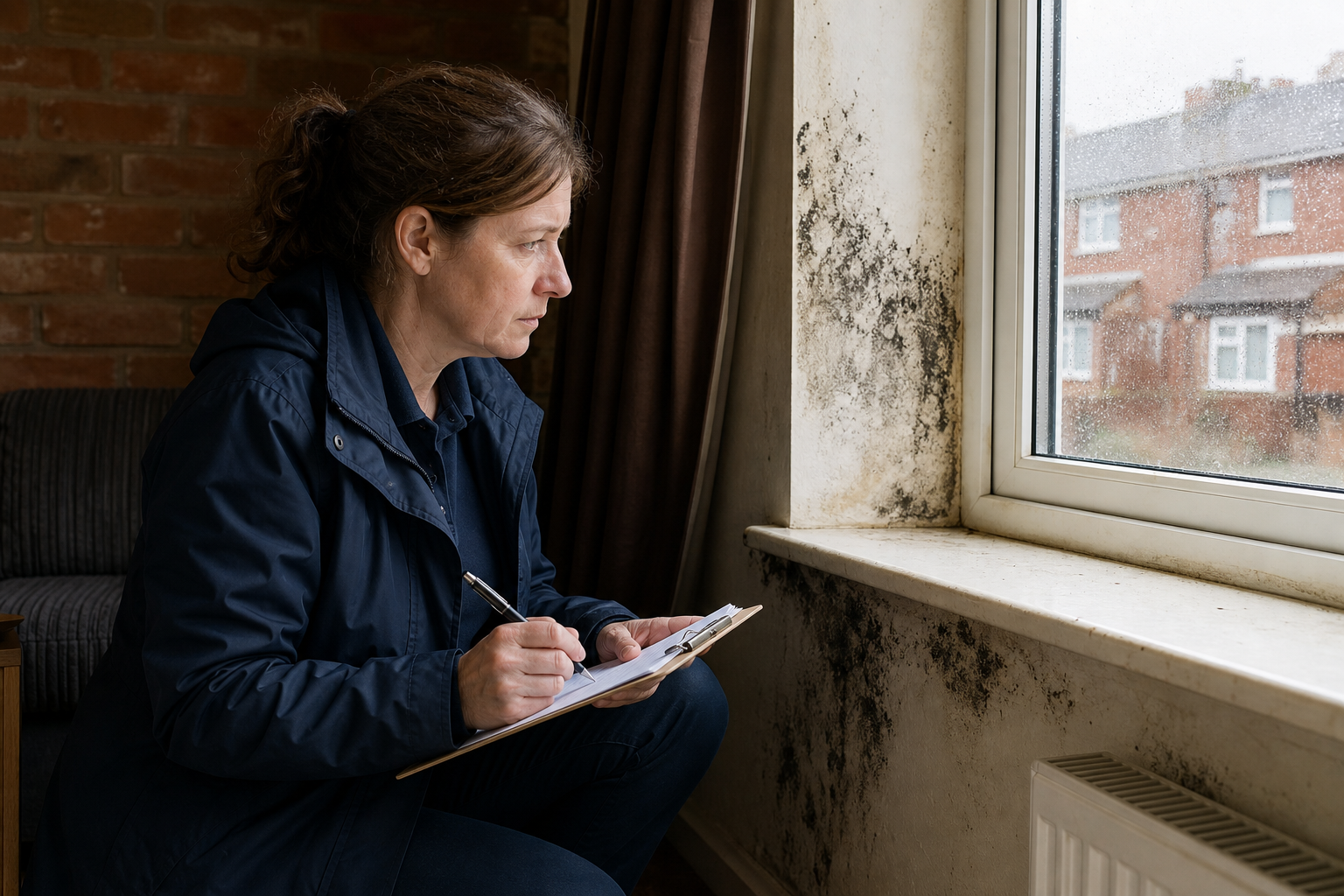
Illustration: housing conditions relevant to the article
Awaab's Law puts statutory investigation and remedial windows on social landlords dealing with reported hazards, particularly damp and mould. It followed the death of two-year-old Awaab Ishak in 2020. If you vet HDR files for a living, it changes the first question you ask.
Before Awaab's Law, you were often asking whether the landlord failed to repair within a reasonable time after notice. Now, for qualifying hazards, you are asking whether the landlord met the fixed statutory clock for investigation and remedial work. That is a different file. A different instruction decision.
At intake, that distinction matters. A case that looked soft under a general reasonable-time argument can strengthen sharply once you map it against the statutory timetable. You also need to know which hazard category you are in. "Damp reported" is not enough. The panel will want the category pinned down.
This is exactly the sort of check that gets missed when intake teams work from memory or a Word checklist. EWLPS runs it on every file, as standard, alongside Section 11, notice, and limitation.
Shaine Stead, Founder & Legal Operations Director
Vet your next file
Upload a case pack at app.ewlps.co.uk and see what your panel would have asked before you refer it.
Open the vetting tool →